Skip to main content

EV ECOSYSTEM

EV manufacturers explained: who actually builds the cars

The global EV market is now genuinely global. The top ten EV producers of 2026 include three Chinese companies, two American, one Korean, one Japanese, one German and two French. Understanding who builds what — and where their batteries come from — explains a lot about price, software quality and after-sales support.

By EV Charge Routes EditorialUpdated 20 May 20267 min read
Electric vehicles parked on a production line at an automotive factory

The 2026 market in one table

Two companies dominate global BEV sales: BYD and Tesla. Behind them sits a long tail of mainstream and premium makers competing on different fronts.

Approximate 2025 full-year global BEV sales (passenger cars)
GroupBEV unitsKey brandsMain markets
BYD~3.1 millionBYD, Denza, YangwangChina, Europe, Australia, SE Asia
Tesla~1.85 millionTeslaUS, China, Europe
Geely Group~950,000Volvo, Polestar, Zeekr, Lotus, SmartGlobal
VW Group~770,000VW, Audi, Porsche, Škoda, CupraEurope, China
Hyundai-Kia~620,000Hyundai, Kia, GenesisKorea, US, Europe
SAIC~580,000MG, Rising, MaxusEurope, Australia, UK
Stellantis~510,000Peugeot, Fiat, Citroën, Jeep, OpelEurope, US
BMW Group~420,000BMW, Mini, Rolls-RoyceGlobal
Renault Group~390,000Renault, Dacia, AlpineEurope
Mercedes-Benz~310,000Mercedes-EQGlobal

Estimates based on EV-Volumes.com Q4 2025 data plus OEM filings. Excludes plug-in hybrid sales.

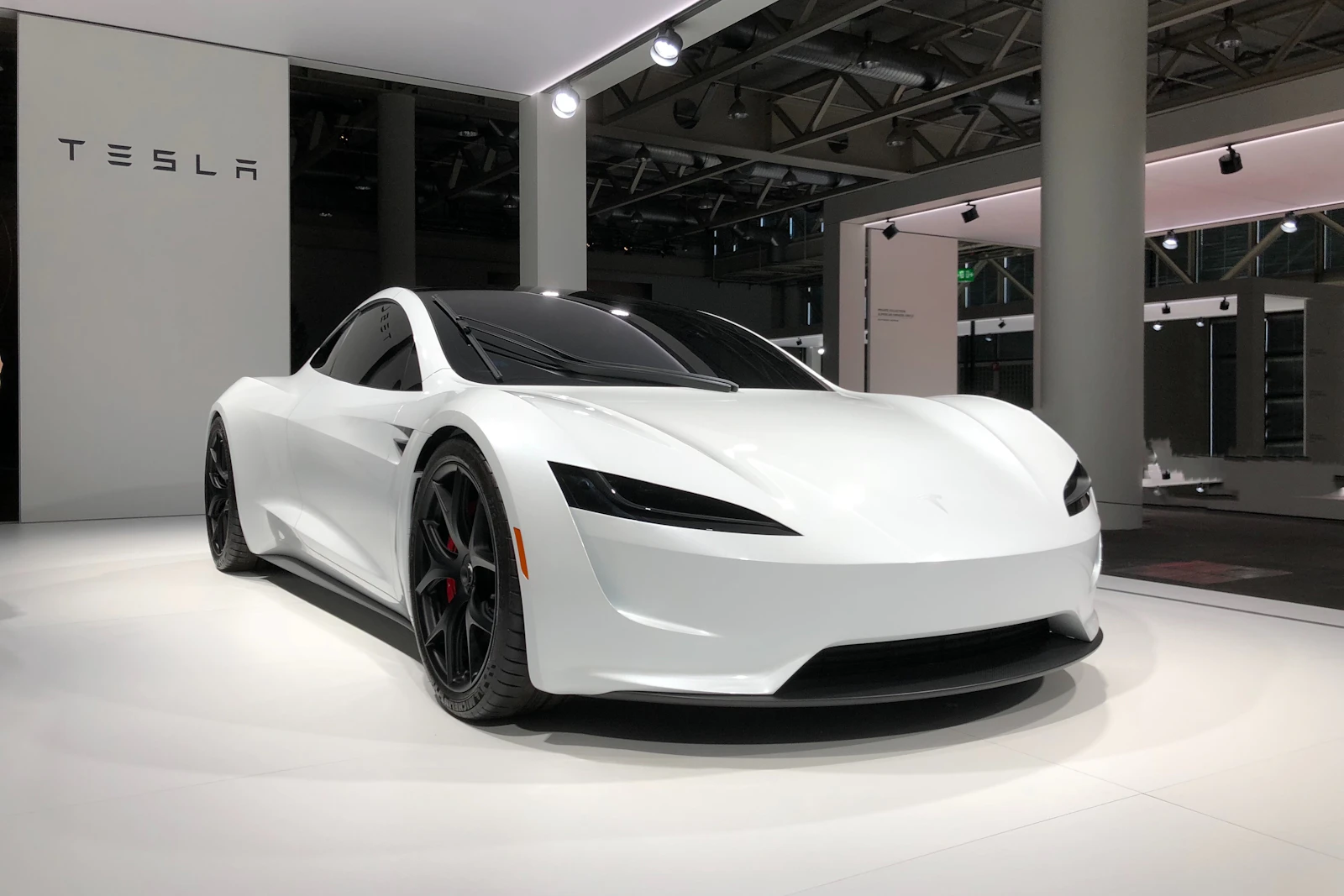
Tesla: the original vertical integrator

Tesla designs its own cells (4680, 2170), motors, inverters, casting machinery and operating system. It builds in California, Texas, Berlin, Shanghai and (from 2026) Monterrey. The Model Y has been the best-selling car in the world — across all powertrains — in 2023, 2024 and 2025.

Tesla's 2026 line is the Model 3, Model Y, Model S, Model X, Cybertruck and (announced) a sub-$30,000 model. The Supercharger network is now open to non-Tesla cars across Europe, North America and Australia, which has made Tesla the de facto interoperable charging operator in many regions. See Tesla Supercharger network for details.

BYD: from batteries to cars

BYD started as a battery company in 1995 and made its first car in 2003. It is now the only major automaker that designs and builds its own LFP cells, semiconductors, motors and bodies — and the only one that has both a passenger-car business and a major commercial-EV business (electric buses, trucks, and forklifts).

The European-relevant lineup as of 2026 includes the BYD Atto 3, Dolphin, Seal, Seal U and the upcoming Sealion 7. UK launched in 2023, France and Italy in 2024. Australia has had BYD since 2022 through EV Direct. See BYD brand page for the full range.

VW Group: MEB, PPE and the SSP transition

Volkswagen Group has the largest dealer footprint in Europe and produces EVs under VW, Audi, Porsche, Škoda, Cupra and Bentley. Its passenger EVs sit on two platforms today — MEB (400V, Skoda Enyaq, VW ID.3, ID.4, ID.5, Cupra Born, Audi Q4 e-tron) and PPE (800V, Porsche Taycan, Macan EV, Audi Q6 e-tron).

From 2027 the entire group transitions to SSP (Scalable Systems Platform), which will support both 400V and 800V and use VW's own PowerCo cells. The transition has been politically and financially painful but is well advanced.

Hyundai-Kia: E-GMP and Genesis

Hyundai-Kia's E-GMP platform underpins the Ioniq 5, Ioniq 6, Ioniq 9, Kia EV6, Kia EV9 and Genesis GV60, GV70 EV and GV80 EV. It was the first mainstream 800V platform and is widely regarded as the benchmark for rapid-charging performance.

Hyundai-Kia is also the only group besides Tesla to publish credible long-term battery degradation data: their own fleet shows the E-GMP packs at >92% capacity after 200,000 km in real-world Korean conditions. See Ioniq 5 and EV6.

Stellantis, Renault, Mercedes, BMW

European mainstream makers are rolling out new EVs faster in 2026 than at any point in their history. Stellantis (Peugeot, Citroën, Fiat, Jeep, Opel) is using its STLA Medium platform across the e-3008, e-5008, Citroën e-C3 and Lancia Ypsilon EV. Renault Group is launching the affordable 5 E-Tech and 4 E-Tech on the AmpR Small platform — both built in France with European-sourced batteries.

Mercedes-Benz has the EQS, EQE, EQE SUV and the new MMA-platform CLA EV (2026). BMW has the i4, i5, i7, iX, iX1, iX2 and the new Neue Klasse iX3 (2025) which moves to 800V and pouch cells from Eve Energy.

The Chinese newcomers Europe is now meeting

Beyond BYD, Europe and Australia are getting a wave of Chinese brands: Xpeng (G6, G9), Nio (ET5, ET7), Zeekr (001, X), GAC Aion, Leapmotor (through Stellantis), Omoda (through Chery), and BYD's premium spin-offs Denza and Yangwang. SAIC's MG sub-brand — MG4, MG ZS EV, Cyberster — has been the leading Chinese-owned brand by volume in Europe for two years running.

The 27.5% EU tariff on Chinese-built BEVs (in force since November 2024) has slowed but not stopped this expansion. Several Chinese makers are now building or planning plants in Hungary, Spain, Italy and Turkey to avoid the duty.

Where the cars are physically built

Country of assembly matters for tariffs, warranty support and resale value. As of 2026, most European-market EVs are built in Europe, but the share of Chinese-built cars is rising. Australian-market EVs are overwhelmingly imported, mostly from China and Korea.

The next five years will see major new EV plants in Hungary (BYD), Spain (Stellantis-Leapmotor, CATL), France (ProLogium, Verkor, ACC), Germany (Tesla, PowerCo, CATL), the UK (Tata Agratas) and Indonesia (LG, CATL).

  • China: BYD, Geely brands, MG, Nio, Xpeng, Tesla Shanghai
  • Korea: Hyundai-Kia (Ulsan, Hwaseong), Genesis
  • Germany: VW, Audi, Porsche, BMW, Mercedes, Tesla Berlin
  • France: Renault (Douai, Maubeuge), Stellantis (Mulhouse, Sochaux)
  • Italy: Stellantis (Mirafiori), Maserati (Modena)
  • Spain: Stellantis (Vigo), Volkswagen Navarra, future Leapmotor
  • USA: Tesla, Ford, GM, Rivian, Lucid
  • UK: Nissan (Sunderland), Mini (Oxford), BMW (Cowley), future Tata Agratas

What this means when you're buying

The brand-of-origin question matters less than it used to for build quality — Korean and Chinese makers now match or beat European reliability surveys. What still matters is software updates (Tesla and BYD lead; legacy European OEMs are catching up), dealer density (Hyundai-Kia, Renault and Stellantis still lead in Europe), and parts supply (be cautious with very new Chinese entrants without local stock).

For a head-to-head shortlist of 2026 EVs by use case, see Best EVs 2026 and Compare EVs.

Who builds what, and where

Vehicle assembly and final-mile branding are often in different countries. A 2026 UK-market Tesla Model Y is built in Berlin; an Italian-market BYD Dolphin is built in Hungary from late 2025; a French-market Megane E-Tech is built in Douai. Tracing the actual origin matters for incentives, warranty, and parts.

2026 final assembly locations for popular EVs
CarBrand HQAssembled inBattery cell origin
Tesla Model Y RWDUSABerlin / ShanghaiCATL (LFP)
BYD Atto 3 (Europe)ChinaSzeged (HU) from 2025BYD (LFP Blade)
Hyundai Ioniq 5South KoreaUlsan (KR)SK On (NMC)
Kia EV6South KoreaHwaseong (KR)SK On (NMC)
MG4ChinaNingde (CN)CATL (LFP / NMC)
Renault Megane E-TechFranceDouai (FR)LG Energy Solution (NMC)
VW ID.3GermanyZwickau (DE)CATL / LGES
Stellantis e-208MultinationalTrnava (SK)ACC (Stellantis-TotalEnergies JV)

Regional brand strength: UK, France, Italy, Australia

EV market share by brand looks very different in each of our four markets. In the UK (2026 H1 SMMT data) Tesla, BYD, MG and Volkswagen lead the BEV charts. In France (PFA / AAA-Data) Renault, Tesla, Peugeot and Citroën dominate, with strong national-brand loyalty for Stellantis marques. In Italy (UNRAE) Tesla and BYD lead premium and value respectively, with Fiat 500e dominating city segments. In Australia (FCAI / VFACTS) Tesla and BYD together account for over half of new BEV sales, with MG, Polestar and Kia rounding out the top five.

What this means for a buyer: dealer density, parts availability and used-car liquidity vary by market. A BYD Atto 3 has 35+ UK dealers, fewer than 20 in Italy and over 100 in Australia. A Renault Megane E-Tech is on almost every French high street but has a smaller UK service footprint outside London.

What this means for buyers — and common misconceptions

Buyers often assume that 'badge' equals 'manufacturer'. It rarely does. A Polestar 2 is built by Volvo Cars (which is owned by Geely); a Cupra Born is built on the same Zwickau line as the VW ID.3; a Smart #1 is jointly engineered by Mercedes and Geely. Warranty and parts logistics follow the engineering parent, not the marketing brand.

A second common confusion is that 'legacy automakers can't make good EVs'. The 2026 data does not support that — the Renault Megane E-Tech, VW ID.7, Hyundai Ioniq 6 and Kia EV9 are all competitive on range, charging and software with anything from Tesla or BYD at their price.

A third is that Chinese brands are interchangeable. They are not: BYD is a vertically integrated battery and car maker; MG is owned by SAIC and sells SAIC platforms; Nio, Xpeng, Zeekr and Leapmotor each have different engineering philosophies and service networks in Europe and Australia.

Frequently asked questions

Who sells the most EVs globally?
BYD overtook Tesla on global BEV+PHEV combined volume in 2023. On pure BEV, BYD overtook Tesla in 2024. Tesla remains the largest BEV-only brand in the US and Europe by individual brand.
Are Chinese EVs reliable?
By 2025 the major Chinese exporters (BYD, MG, Xpeng, Nio) match or exceed European reliability surveys (Which?, ADAC, J.D. Power) on early-life mechanical and electrical issues. Long-term data is still maturing.
Why do European EVs cost more than Chinese ones?
Labour, energy, parts, regulation and dealer margin costs are all higher in Europe. Chinese OEMs also benefit from vertical integration (BYD makes its own cells, semiconductors and motors). The EU tariff partially offsets the price gap.
Is Tesla still the technology leader?
Mixed. Tesla still leads on charging network access, software updates and propulsion efficiency. BYD leads on cell technology, vertical integration and price-per-range. Hyundai-Kia leads on 800V charging speed.
Where can I see what battery a car uses?
Most spec sheets are vague. Independent data (such as the EV Database, the Battery Insights database, ICCT) lists cell supplier and chemistry by model. We summarise this on each vehicles page.
Will my EV brand still be around in 10 years?
All the named groups in the table above are financially viable and committed to EV-only futures. Smaller players (Fisker, Canoo, Lordstown) have already failed. For a long ownership plan, stick to the top 15 by volume.
Are EV manufacturers profitable?
Tesla, BYD, Geely brands and the Korean OEMs are EV-profitable in 2025. Most European legacy makers are still subsidising EV margins with ICE profits. This is shifting fast as scale arrives.