Skip to main content

Tesla · Mid-size SUV

Tesla Model Y charging specs & real-world range

Independent spec sheet for the Tesla Model Y (2022–present (Juniper refresh 2025)) — battery, DC charging curve, home wallbox notes and a practical FAQ for UK, French, Italian and Australian owners.

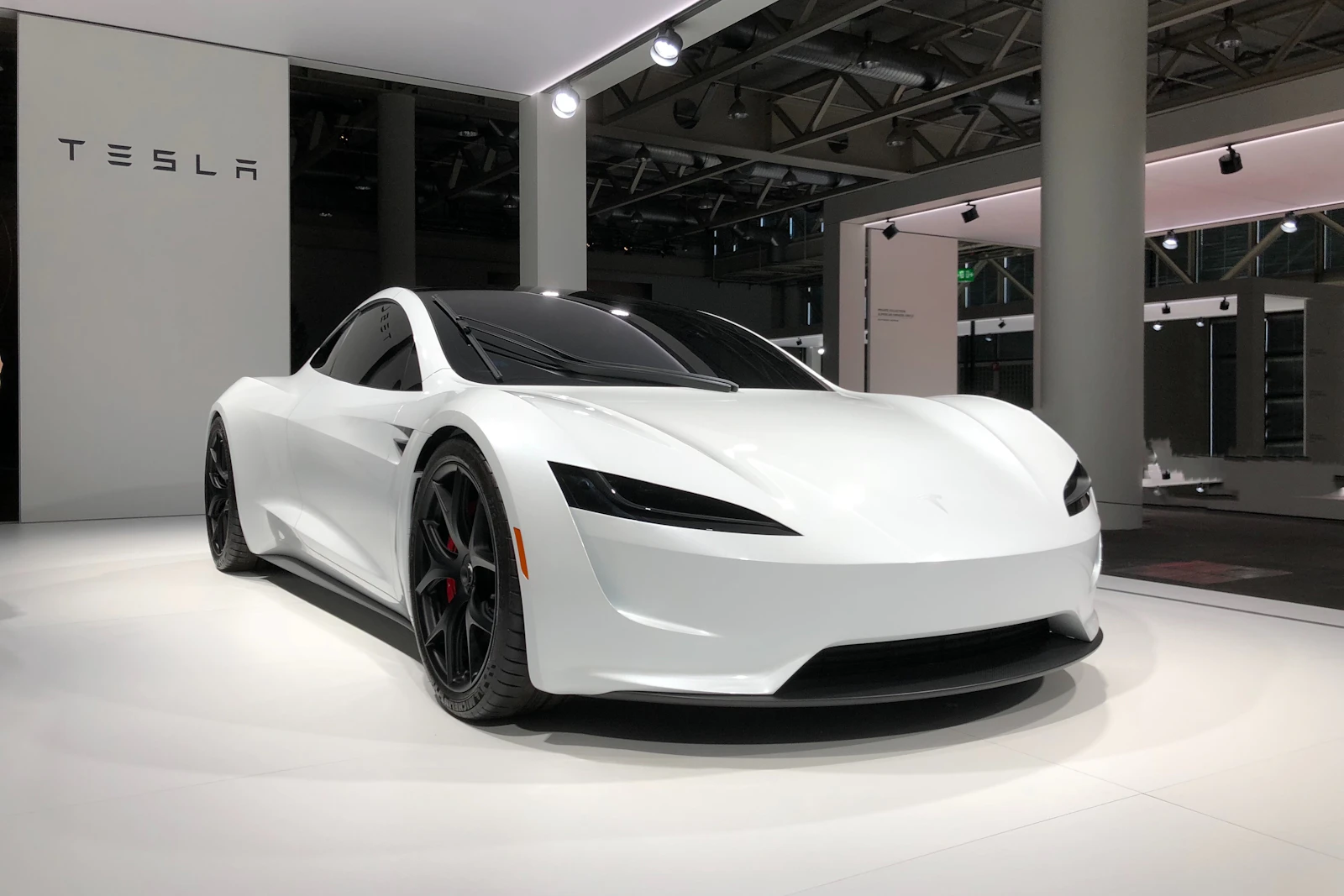
White Tesla Model Y parked at a Tesla Supercharger station with the charge port open
Stock photography — representative image of a Tesla Model Y

Overview

The Tesla Model Y is the best-selling EV in the world, and for most of the markets EV Charge Routes covers — the UK, France, Italy and Australia — it is the default benchmark for what a mid-size electric SUV should be. It pairs a 75 kWh usable pack with a 250 kW peak DC charge rate, a tightly integrated route-planning system, and access to the Tesla Supercharger network, which in 2026 is increasingly open to non-Tesla CCS2 vehicles across all four regions.

Three trims dominate the current line-up: a rear-wheel-drive Standard variant on an LFP pack (~455 km WLTP), a Long Range AWD on an NMC pack (~600 km WLTP), and the Performance with the same NMC pack tuned for acceleration. All three share the same 400 V architecture, the same 11 kW onboard AC charger, and the same NACS / CCS2 dual-port hardware depending on region. The 2025 'Juniper' refresh improved aerodynamics, suspension and cabin noise but left the powertrain and charging curve largely unchanged.

On price, the Model Y now sits below the Hyundai Ioniq 5, Kia EV6 and most European premium rivals after several rounds of 2024–2025 cuts. Combined with the Supercharger network advantage, that's why it remains the easiest 'first long-distance EV' recommendation we give in this guide library.

Specs at a glance

Usable battery
75 kWhNMC/LFP options · 400V
Peak DC rate
250 kW10→80% in ~27 min
Peak AC rate
11 kWType 2
Real-world range
430 kmWLTP 600 km
Winter range
305 km~0°C motorway estimate
UK starting price
£44,990Inc. VAT, 2026 list

Public DC charging

At a real 250 kW V3 or V4 Supercharger, a Long Range Model Y holds above 200 kW from roughly 10% to 35% SoC, then tapers to about 100 kW by 60% and 55 kW by 80%. A typical 10→80% road-trip session takes 27 minutes with a pre-warmed battery and an unshared stall. Plan for 32–38 minutes if the pack is cold or the bay is paired.

Outside the Supercharger network, the car is fully CCS2-compatible and pulls up to 250 kW on Ionity, InstaVolt, Evie, Fastned and Enel X Way 350 kW cabinets. The in-car navigation will not automatically route through non-Tesla networks unless you select 'Add charging stop' manually, so for mixed-network trips we recommend pre-planning with the EV Charge Routes route planner and entering Supercharger and CCS sites as waypoints.

Battery preconditioning is automatic when you set a Supercharger as your nav destination; for non-Tesla DC chargers, trigger it manually from Controls → Service → Precondition battery roughly 20 minutes before arrival in cold weather. Skipping precondition in winter typically doubles your 10→80% time on the LR pack.

Charge curve

Approximate DC charge power delivered at each state of charge on a pre-warmed pack at a 250 kW capable stall.

State of chargeDC power delivered
10%245 kW
20%250 kW
30%220 kW
40%175 kW
50%145 kW
60%110 kW
70%80 kW
80%55 kW
90%35 kW

Home charging

The Model Y ships with a Type 2 inlet on the driver's-side rear quarter panel and supports 11 kW three-phase or 7.4 kW single-phase AC charging. A typical UK or AU single-phase 7 kW wallbox refills the usable pack from 20% to 80% overnight in about 6 hours 30 minutes — well within an off-peak Octopus Intelligent, EDF Tempo or Amber Electric window.

On the LFP Standard, Tesla recommends charging to 100% at least once a week to keep the BMS calibrated; on the NMC Long Range and Performance, daily charging to 80% is the standard recommendation. The car will respect a scheduled departure time and warm the cabin from grid power — useful in winter and one of the biggest practical advantages over older Hyundai/Kia software.

If you don't have off-street parking, the Model Y's relatively low 16.5 kWh/100km real-world consumption means a single 30-minute Supercharger session per week is enough for most commuters covering 250 km. See our home charging setup guide for wallbox installation costs in each region.

Road-trip tips

On long European trips (e.g. London → Geneva, Paris → Milan, Sydney → Melbourne), the Model Y's Supercharger-first nav strategy plans stops every 250–300 km in summer and 180–220 km in winter. Override the suggested 'arrive at 10%' floor to 15–20% if you're in mountainous terrain or extreme cold.

The Performance trim consumes 10–15% more than the Long Range at motorway speeds, but its peak DC rate is identical, so total trip time is usually only 3–5 minutes longer per 1,000 km. The LFP Standard is the outlier — a 130 kW peak rate and smaller pack mean it's 20–30% slower on long highway runs.

Use the station search to identify CCS2 backups within 10 km of every Supercharger you plan to use. Even Tesla's network has occasional outages, and on the busy Friday-evening southern France routes we routinely see queue waits of 15–25 minutes at flagship sites like Lyon Vienne or Aire de Pampelonne in July.

Cold-weather behaviour & winter tips

In sustained sub-zero motorway driving the Long Range Model Y typically drops from ~430 km of mixed-cycle range to around 305 km — a 25–30% hit. Most of the loss is heat-pump load and tyre-rolling resistance on cold rubber; the 2022+ heat-pump system is among the most efficient on the market, but it still pulls 1–2 kW continuously when ambient is below 0 °C.

Always trigger battery preconditioning before a DC stop in winter. With a Supercharger set as the nav destination the car handles it automatically about 20–30 minutes out; for Ionity, Fastned or Evie stops you must select 'Precondition battery' manually from the Controls menu. A cold pack arriving at 5 °C will limit you to roughly 80–100 kW peak instead of 250 kW, doubling your 10→80% session time.

Use Scheduled Departure overnight so the car warms the cabin and battery from grid power, not the pack. Set tyres to the upper end of the placard pressure range in winter, and consider winter rubber in Alpine France, northern Italy or Scottish Highland routes — the all-season Hankooks fitted from the factory give up significant grip below 5 °C and that affects both stopping distance and regen efficiency.

Resale value & 5-year ownership cost

Five-year residuals on the Long Range Model Y are tracking around 48–52% of original list across UK, France and Italy data from cap hpi, Argus and Quattroruote — stronger than the European EV average of ~42% but slightly behind the Hyundai Ioniq 5 thanks to Tesla's aggressive new-car price cuts in 2023–2024. Australian residuals are higher again (55–58% at 5 years) due to constrained supply and the absence of a local Tesla price war.

Total 5-year ownership cost for a UK Long Range driver covering 16,000 km/year on a 7p off-peak tariff lands around £3,800 in home electricity plus roughly £450/year in insurance (group 50), £180 in tyres averaged, and £0 in routine servicing — Tesla has no scheduled service intervals. Budget £900 for a brake-fluid change at year 4 and £350 for a cabin/HEPA filter swap at year 3.

The main ownership risks to model are: 12 V battery failures in pre-2023 cars (a £150 dealer job), suspension control-arm bushings around 120,000 km, and out-of-warranty AC compressor failures which can run £2,500+. The 8-year / 192,000 km battery and drive-unit warranty covers the expensive components, and most Long Range packs are still showing 88–92% capacity at 5 years per Tesla fleet telemetry.

Pricing across regions

RegionFrom
United Kingdom£44,990
France€44,990
Italy€44,970
AustraliaA$58,900

Manufacturer starting prices, before incentives or on-road costs. Verify with the local dealer before purchase.

Frequently asked questions

How long does a Tesla Model Y take to charge from 10–80%?
About 27 minutes at a 250 kW V3 or V4 Supercharger with a pre-warmed battery and a non-shared stall. Add 5–10 minutes for cold-weather sessions or power-shared bays.
Can a Model Y use non-Tesla CCS2 chargers?
Yes — every Model Y sold in the UK, France, Italy and Australia ships with a CCS2 inlet and works on Ionity, InstaVolt, Fastned, Evie, Enel X Way, Allego, TotalEnergies and most other public DC networks at up to 250 kW.
What is the real-world range of a Tesla Model Y Long Range?
Around 430 km in mixed driving with a moderately full pack, dropping to about 305 km at sustained motorway speeds in cold weather. WLTP is 600 km but is rarely reached outside of slow, warm urban driving.
How much does it cost to charge a Tesla Model Y at home?
On a UK off-peak tariff of around £0.075/kWh, a full 0–100% home charge costs roughly £5.85. On a French EDF Tempo blue night-rate the figure is similar in euros. Always charge at home when you can — public DC is typically 6–10x more expensive per kWh.
Is the LFP Standard Model Y slower to charge than the Long Range?
Yes. The LFP pack peaks around 175 kW vs 250 kW for the NMC Long Range, and the curve tapers earlier. Expect 28–32 minutes for 10–80% on a Supercharger, vs 27 minutes for the LR.
Does the Model Y come with a home charging cable?
It ships with a portable Mobile Connector with a Type 2 / NACS plug and a 230 V household adapter — usable but slow at about 2.3 kW. A 7 kW or 11 kW wallbox is strongly recommended for any home setup.
Will the Model Y use the Tesla NACS standard in Europe?
No. European, UK and Australian Model Y vehicles use the CCS2 inlet exclusively for DC charging and Type 2 for AC. NACS is the North American standard. Adapter availability for European NACS-ports is not on the 2026 roadmap.

More EVs

Plan your next trip

Tools that work with the Tesla Model Y